
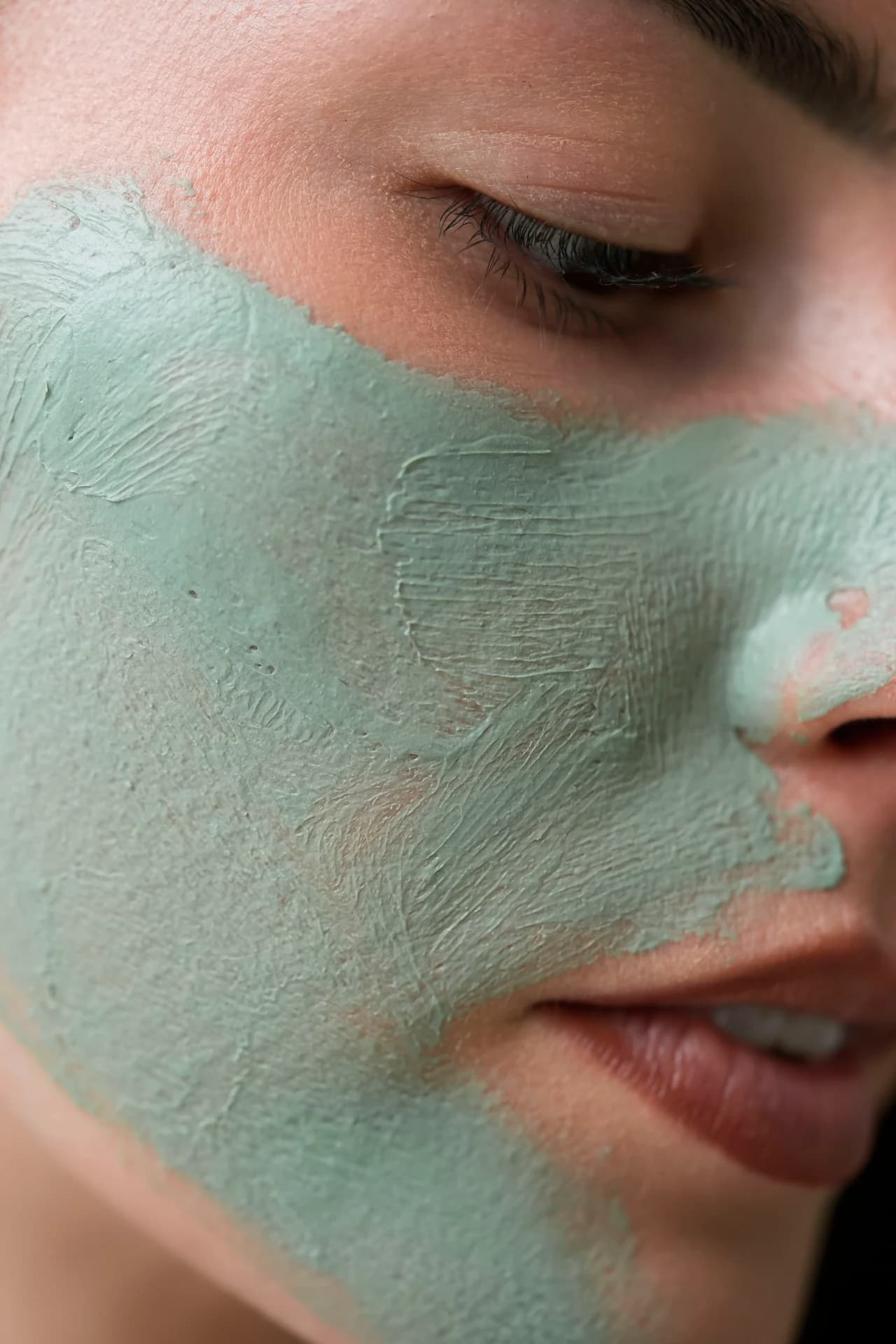
Zeolite isn't one mineral. It's a family of them, and the one we build on is called clinoptilolite, formed when volcanic ash fell into ancient lakes and crystallised under pressure into a framework of channels narrow enough to be measured in angstroms.
That framework is the whole reason it behaves the way it does. The surfaces inside those channels carry a negative charge, so positively charged particles get held there instead of being soaked up. Chemists call it adsorption, and the difference from absorption matters: things stick to the surface rather than disappearing inside.
On skin that turns into something fairly modest. Zeolite binds impurities and excess sebum on the surface and holds onto them until you rinse. That's a gentler mechanism than stripping, which is why a formula built on it can clean without leaving skin tight afterwards.
Most brands that mention a mineral are using a trace of it. On our labels zeolite sits second, directly after water, in both Derm and the Azuki scalp mask. INCI lists are ordered by concentration down to one percent, so that position isn't a marketing line, it's something you can check on the tube in your hand.
Ours comes from certified European deposits, micronised to a grade fine enough that you don't feel it, and tested batch by batch before it goes anywhere near a formula.
Everything it does happens on the surface. That's the limit of the ingredient, and it's also why it suits skin that reacts badly to more aggressive actives.
We keep coming back to it because the property is measurable, which in a category built mostly on adjectives is rarer than it ought to be.