
What a zeolite actually is
Zeolites are hydrated aluminosilicates, crystals built from silicon, aluminium and oxygen arranged into a rigid open framework. They form where volcanic ash meets alkaline water, which is why the deposits sit in ancient lake beds and marine sediments, and why the material spent millions of years underground before anyone thought to grind it fine enough for skin.
The family is large. Dozens of species occur in nature and many more are made synthetically for industry, where they work as catalysts, water softeners and molecular sieves. Cosmetics draw on a small part of that family, and clinoptilolite is the member with the longest record.
A cage, not a sponge
The word zeolite describes a structure rather than a single chemistry. Inside the crystal, the framework encloses a system of channels of a fixed and repeating size. In clinoptilolite those channels measure roughly 0.4 to 0.7 nanometres across, which is narrow enough that anything larger than the opening simply cannot get in.
That fixed dimension is what separates a zeolite from a clay. Clay swells and holds material against its surfaces without much discrimination. A zeolite has a doorway, and the doorway has a width.
Where the charge comes from
In the framework, some silicon atoms are replaced by aluminium. Silicon carries four positive charges and aluminium three, so every substitution leaves the structure one charge short. The crystal balances that deficit by holding loosely bound positive ions inside its channels, usually sodium, potassium, calcium and magnesium.
Those ions are exchangeable. When the mineral meets a solution containing other positively charged particles, it can swap one for another. The property is called cation exchange, and it is why zeolite turns up in water treatment, soil conditioning and industrial filtration long before it reaches a cosmetics lab.
Why clinoptilolite in particular
Clinoptilolite is the most abundant natural zeolite and the most studied. Its framework carries a high ratio of silicon to aluminium, which makes it unusually stable, and it holds its structure in acidic conditions where other zeolites begin to break down.
For a cosmetic that matters more than it sounds. Healthy skin sits at a mildly acidic pH, and a mineral that loses its structure at that pH is of no use in a formula meant to stay on the skin.
From mined rock to cosmetic grade
Mined rock is not a cosmetic ingredient. Ours is activated, then micronised to an ultra-fine particle size, then tested batch by batch in the EU. Micronisation is the step that decides whether a mineral feels gritty or disperses smoothly, and it is where most of the processing cost sits.
Our zeolite comes from certified European deposits.
What it does in a formula, and what it does not
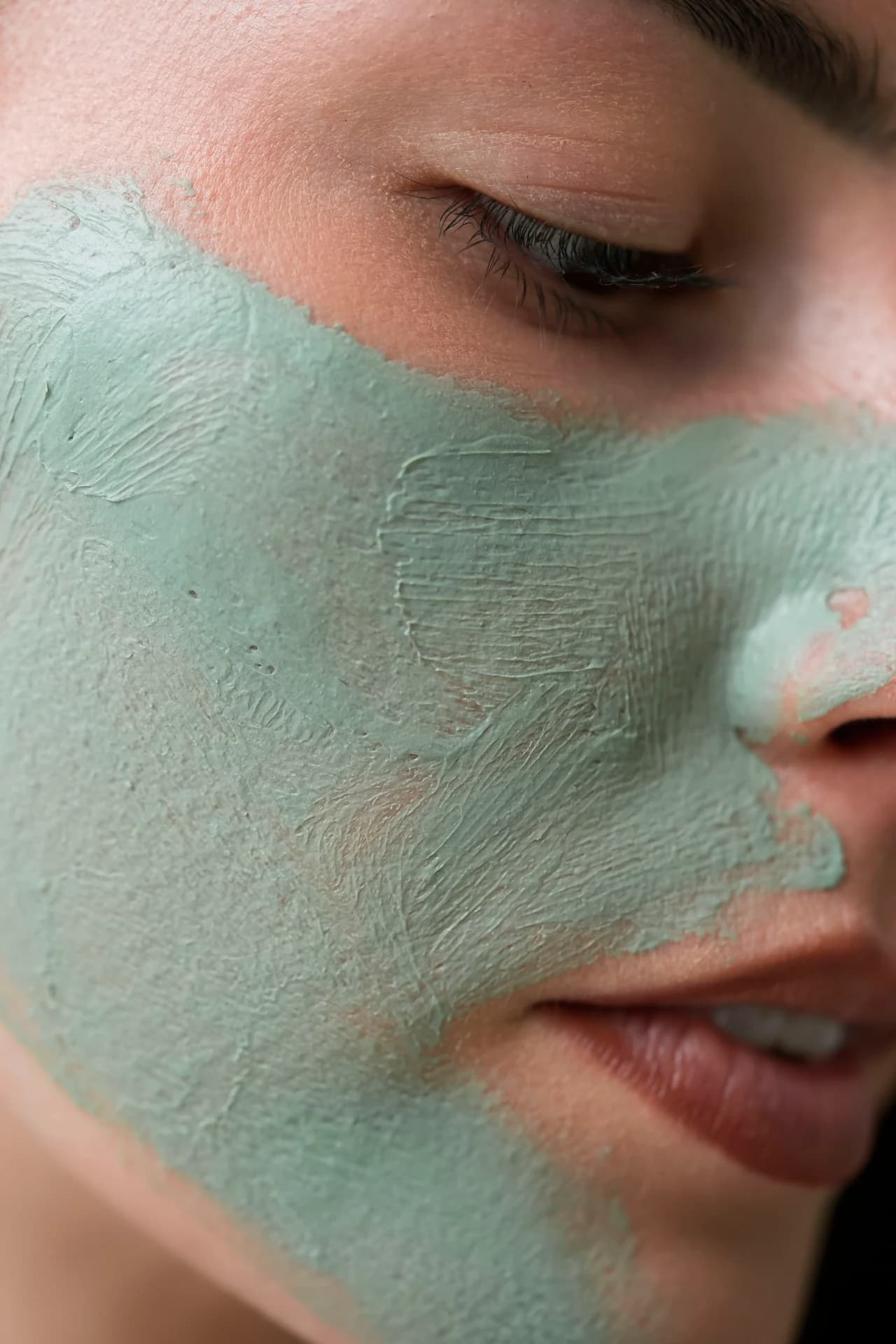
On skin and scalp, zeolite works at the surface. It binds impurities and excess sebum so they lift away when you rinse, which is why formulas built on it can clean thoroughly without the tight, stripped feeling that stronger surfactants leave behind.
It is worth being precise about the limits. Zeolite has been studied extensively for what it binds in water and in food, and those results belong to those contexts. A cosmetic is a cosmetic: it works on the surface of the skin, and that is how we describe it.